

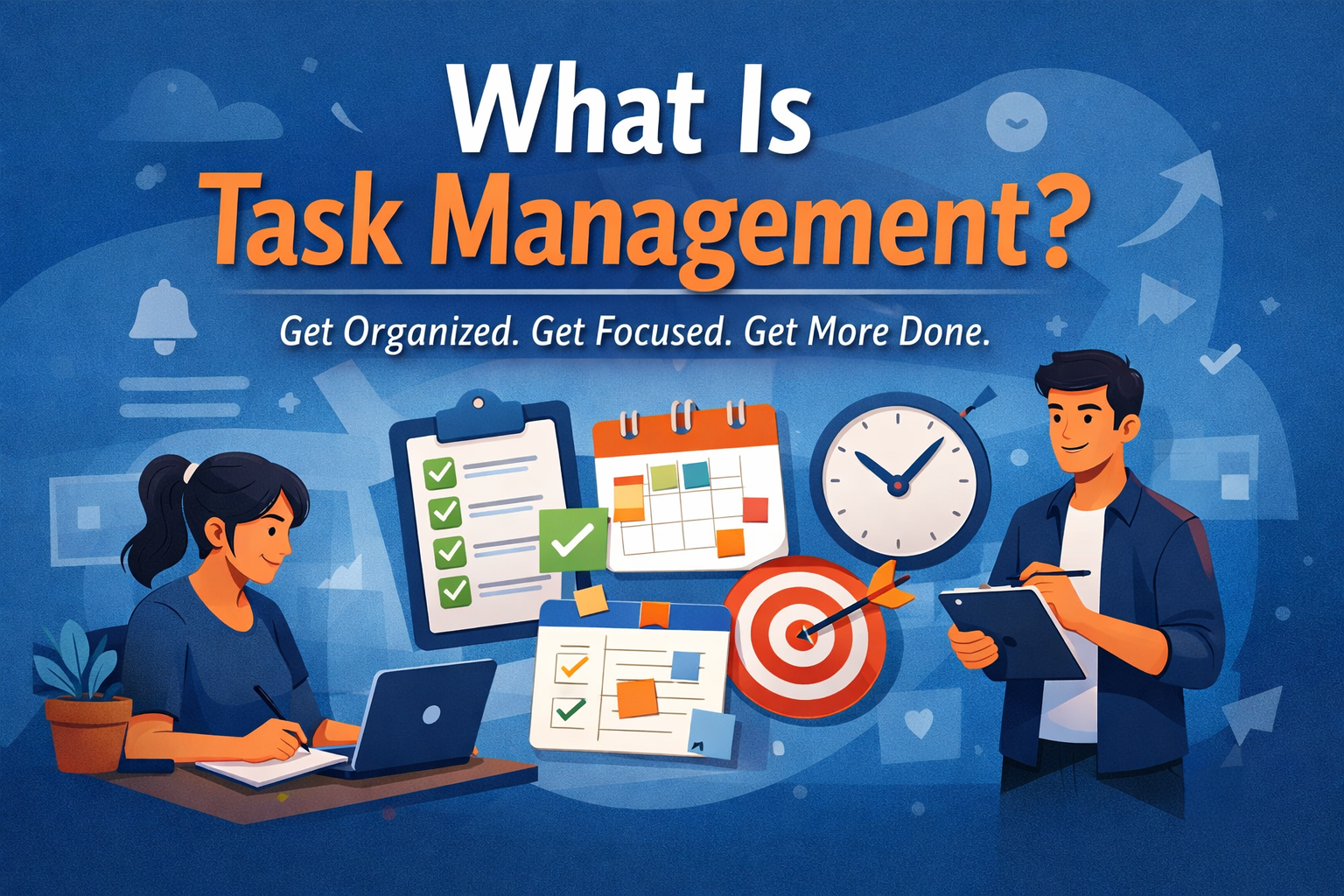
The Meaning of Task Management
Task management goes beyond writing a simple to-do list. It involves breaking larger goals into actionable tasks, assigning priorities, setting deadlines, and monitoring progress over time. Whether you’re managing personal responsibilities, running a business, or collaborating with a team, task management provides structure and clarity. Good task management systems help you avoid forgotten tasks, missed deadlines, and last-minute rushes. Instead of reacting to work as it appears, you proactively plan your time and energy around what matters most.
Why Task Management Matters
Without task management, work tends to feel overwhelming. Tasks pile up, priorities blur, and important work gets lost among urgent distractions. Effective task management helps you:
- Stay focused on high-impact work
- Reduce mental load and decision fatigue
- Improve time management and consistency
- Track progress toward long-term goals
- Collaborate more clearly with others
For teams, task management also creates transparency. Everyone knows what’s being worked on, who owns what, and where projects stand—eliminating confusion and duplicated effort.
Key Elements of Task Management
Most task management systems include a few core components:
- Tasks and Subtasks – Clearly defined actions that move work forward.
- Prioritization – Deciding what matters most right now versus later.
- Deadlines or Time Frames – Providing urgency and accountability.
- Organization – Grouping tasks by project, category, or workflow.
- Progress Tracking – Seeing what’s done, what’s in progress, and what’s next.
The best systems keep these elements simple and flexible, rather than overwhelming you with unnecessary complexity.
Digital Task Management Tools
While paper planners and notebooks still work for some people, digital task management tools have become the preferred choice for most modern workflows. They allow you to update tasks instantly, access your work from anywhere, and adapt as priorities change. Platforms like todo.io focus on making task management intuitive rather than rigid. Instead of forcing you into complex project structures, tools like todo.io emphasize clarity, speed, and visual organization—so managing tasks doesn’t become a task itself.
Task Management as a Daily Habit
Ultimately, task management isn’t about software—it’s about habits. The goal is to build a simple system you’ll actually use every day. When task management feels lightweight and flexible, it becomes easier to plan your day, stay focused, and finish work with a sense of progress.
Whether you’re managing personal goals or scaling a growing team, understanding what task management is—and using the right tools to support it—can transform how you work. When your tasks are clear and organized, your time and attention can go where they matter most.
