

Most people don’t struggle with making a to-do list. They struggle with keeping it useful. After a few days, tasks pile up, priorities change, and your list becomes a mix of important work, random reminders, and things you feel guilty about. The result is predictable: you avoid the list, start reacting to whatever feels urgent, and end the week wondering where your time went.
A simple fix is the weekly review. It’s a short, repeatable habit that helps you reset your tasks, clarify priorities, and walk into Monday with an actual plan instead of a mess. And the best part is you don’t need an hour-long productivity ritual. For most people, 15 minutes is enough.
Here’s how the weekly review works.
1) Collect loose tasks
Start by gathering anything that isn’t in your system: sticky notes, half-written reminders, screenshots, emails you flagged, and mental “don’t forget” items. If it’s taking up space in your brain, it belongs in one place. Getting everything captured reduces stress immediately because you stop relying on memory to hold your workload together.
2) Clear the backlog
Look at anything that’s been sitting around for more than a week. Ask one question: “Is this still real?” If not, delete it or archive it. If it is real, make it actionable. Rename vague tasks like “Marketing” into something you can complete, like “Draft homepage headline options.” Backlogs are rarely a time problem, they’re usually a clarity problem.
3) Pick your next-week priorities
Choose 3 to 7 tasks that matter most for the coming week. Not 20. Not “everything.” Priorities only work when you can see them at a glance. If you’re managing a team, this is also the moment to confirm ownership so tasks don’t silently drift. Your weekly review should end with a short list you’d feel confident showing to someone else.
4) Break big work into smaller steps
If any priority is larger than 60 to 90 minutes of effort, split it into smaller pieces. This prevents the common trap of carrying a big task around all week without starting. Smaller steps create momentum and make it obvious what “progress” looks like. It also makes it easier to fit work into real-life schedules that get interrupted.
5) Set a simple plan for the first day
Before you finish, decide what “Day 1” looks like. Pick the first one or two tasks you’ll start with. This tiny step removes Monday-morning decision fatigue and turns your plan into action. You’re not just organizing tasks, you’re designing a smooth start to the week.
When you do this consistently, task management stops feeling like an endless game of catch-up. Instead, your list becomes a tool you trust. That’s exactly where a lightweight system helps: when it’s easy to capture tasks, organize them into projects, and surface priorities without friction. todo.io is built around that idea, so your weekly review stays simple, fast, and actually sustainable.
Try it once this weekend: set a 15-minute timer, reset your list, and choose your true priorities. You’ll feel the difference immediately, and you’ll start the week with momentum instead of noise.
Blog
>
The Weekly Review: A 15-Minute Habit That Keeps Your To-Do List Under Control
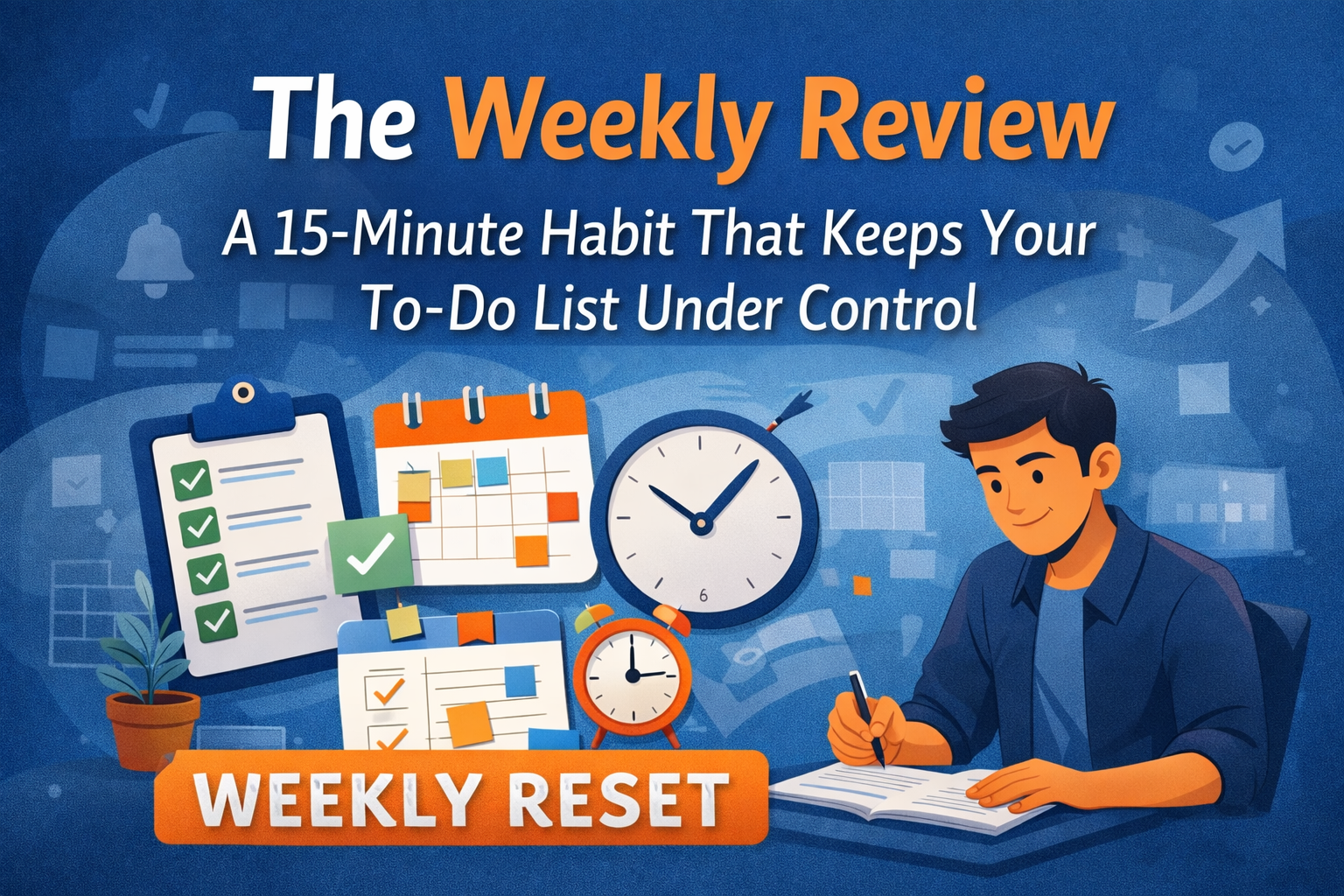
The Weekly Review: A 15-Minute Habit That Keeps Your To-Do List Under Control
Jan 7th, 2026
Get Started For Free
A faster way to capture, organize, and finish work. Get started for free
-

Flexible Boards
-
Clear Priorities
Get Started For Free
A faster way to capture, organize, and finish work. Get started for free
-
Flexible Boards
-
Clear Priorities