

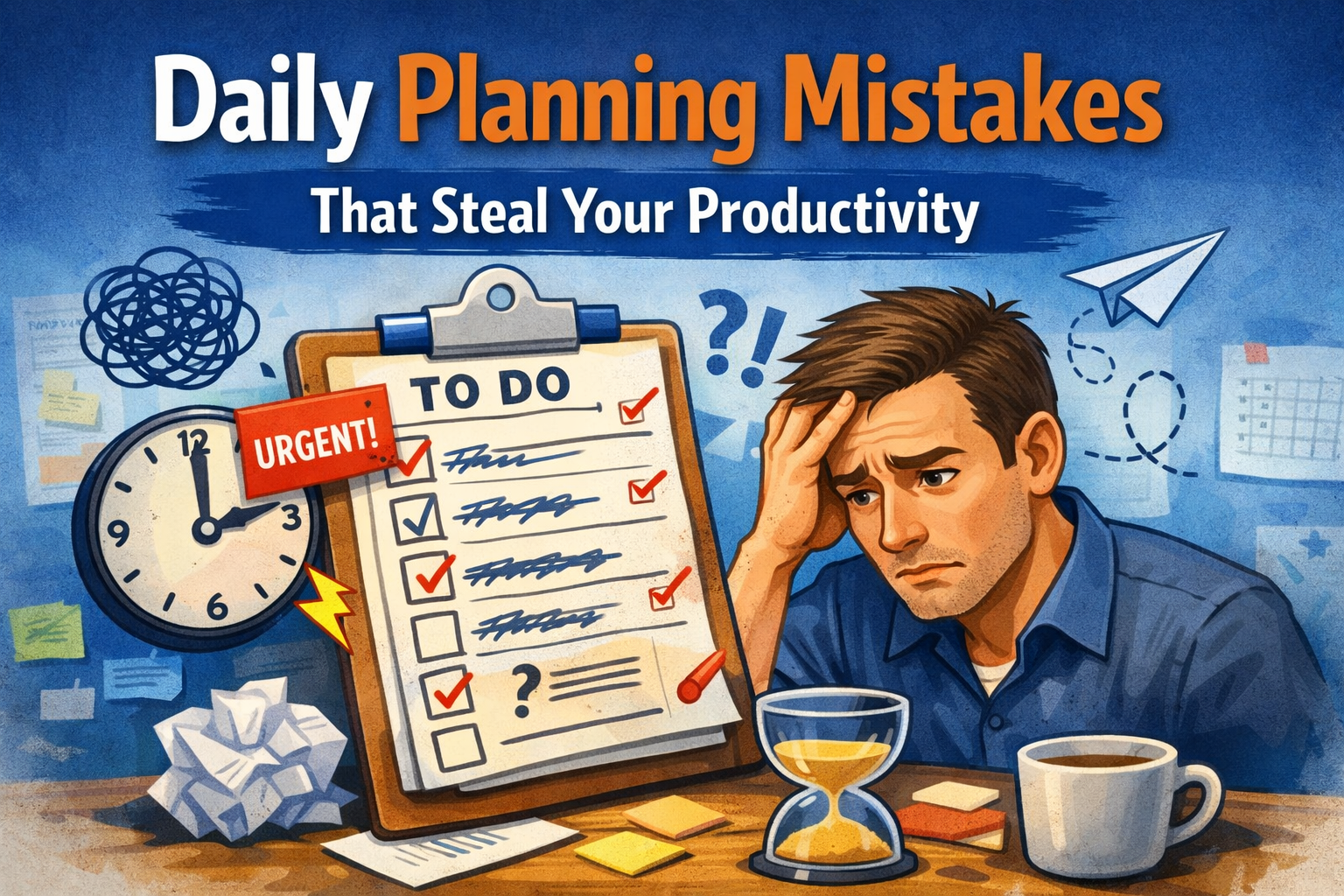
Many people open a task app, write a long list, and assume the day is organized. By noon the list feels heavy and nothing important is finished. The problem is rarely motivation. It is usually a few simple planning mistakes that repeat every day. Understanding those mistakes is the fastest way to improve productivity without working longer hours.
Mistake 1: Planning too many priorities
A day cannot have ten priorities. When everything is marked important, nothing truly is. A better approach is to choose two or three outcomes that would make the day feel successful. Other tasks become support work. This small shift reduces decision fatigue and keeps attention on meaningful progress.
Mistake 2: Writing tasks instead of results
Lists often contain vague items like “emails” or “work on project.” These are activities, not results. A strong task answers the question, “What will be different when this is done?” Clear outcomes make it easier to start and easier to finish.
Mistake 3: Ignoring energy levels
People schedule based on the clock instead of their energy. Creative work placed late in the day competes with tired focus. Matching demanding tasks with high-energy hours can double effectiveness without adding time.
How can you plan a day that actually works?
Use a simple structure that repeats each morning:
- Choose three main outcomes
- Break each outcome into one clear next step
- Place those steps at specific times
- Leave space for the unexpected
This method answers common questions people have about planning. How detailed should a plan be? Detailed enough to start, not so detailed it becomes homework. Should every minute be scheduled? No, flexibility protects momentum when real life interrupts.
Mistake 4: Planning only once
A plan created at 7 a.m. will be outdated by 11 a.m. Quick reviews during the day keep priorities honest. Even a 60-second check can prevent hours of drifting toward low-value work.
Mistake 5: Using the wrong tools
Some systems are built for storing information, not guiding action. The best tool is one that makes the next step obvious and friction free. If opening the app feels heavy, the system will be ignored.
What should you do when a day goes off track?
Instead of abandoning the list, reset with one question: “What is the most valuable thing I can finish before the day ends?” Completing a single meaningful task rebuilds momentum and confidence.
A simple evening habit
Spend two minutes reviewing what moved forward. Then write tomorrow’s three outcomes. This closes the mental loop and helps the next morning start calm instead of reactive.
Daily planning does not need complex frameworks. Avoiding a few common mistakes is enough to change how work feels. When tasks describe results, priorities stay small, and plans adapt during the day, productivity becomes natural rather than forced.
